The Science of Sleep: How to Wake Up Feeling Rested Every Single Morning
We have all been there—staring at the ceiling at 3:00 AM, calculating exactly how many hours of rest we will get if we can just fall asleep right now. In our fast-paced, “always-on” world, sleep has often been treated as a luxury or a sign of weakness rather than a biological necessity. However,The Science of Sleep is clear: sleep is not just “downtime” for the body. It is an active, complex neurological process that cleanses the brain of toxins and organizes our memories. Learning how to master your sleep cycle is the single most effective way to improve your mood, your physical health, and your mental clarity.
Achieving deep, restorative rest starts with understanding your circadian rhythm, the internal biological clock that dictates your melatonin production and cortisol spikes. Many people struggle with morning grogginess because they fight against this natural rhythm by using bright screens late at night. When you look at a phone or laptop in bed, the blue light tricks your brain into thinking it is noon, delaying the release of sleep hormones for hours. For those feeling overwhelmed by late-night responsibilities, it might be tempting to look for a way to buy a college essay from a professional brand like myassignmenthelp to clear your schedule and reduce mental clutter. By delegating heavy workloads, you allow your brain to enter the “wind-down” phase early, which is essential for a healthy biological clock reset and long-term wellness.
Understanding the 90-Minute Sleep Cycle
Your The Science of Sleep is not a flat line of unconsciousness. Instead, you move through distinct stages that repeat throughout the night. A complete cycle takes roughly 90 minutes, and most adults need between seven and nine hours of sleep to complete enough cycles for full restoration.
The cycles are generally broken down into three main categories:
- Light Sleep (N1 & N2): This is the transition period where your heart rate slows and your muscles begin to relax. You are easily awakened during these stages.
- Deep Sleep (N3): This is the “physical repair” stage. Your body releases growth hormones, repairs tissues, and strengthens the immune system. If you don’t get enough deep sleep, you will feel physically exhausted the next day.
- REM Sleep: This is the “mental repair” stage. This is when dreaming occurs and your brain processes emotions and information.
To wake up feeling refreshed, the goal is to wake up at the end of a 90-minute cycle rather than in the middle of Deep Sleep. If your alarm goes off while you are in a deep phase, you will experience “sleep inertia,” that heavy, drugged feeling that can last for hours and ruin your morning productivity.
The “Digital Sunset” and Sleep Hygiene
One of the most effective The Science of Sleep hygiene habits you can adopt is the “Digital Sunset.” This means dimming the lights in your home and putting away electronic devices at least 60 to 90 minutes before your intended bedtime. During this time, your body prepares for memory consolidation, the process where the brain “files away” everything you learned during the day.
If you are constantly stressed about academic deadlines or work projects, your cortisol levels stay high, making it nearly impossible to reach the deep sleep optimization phase required for true recovery. Using Essay Help services can be a strategic move to reduce this mental load, ensuring you aren’t staring at a blinking cursor at midnight while your stress hormones skyrocket. Reducing your evening stress allows your adrenal health to stabilize, making it much easier to transition into a peaceful state of mind before your head hits the pillow.
| Habit | Impact on Sleep | Action Level |
| Consistent Wake Time | Regulates the Circadian Rhythm | Essential |
| Morning Sunlight | Sets the timer for Melatonin release | High |
| No Caffeine after 2 PM | Prevents Adenosine blockage | High |
| Cool Room (18°C) | Lowers core body temperature | Essential |
| Magnesium Intake | Relaxes the nervous system | Moderate |
Optimize Your Environment: The 18°C Rule
Your environment plays a massive role in how well you stay asleep once you actually drift off. Scientists have found that the ideal bedroom temperature for high-quality sleep is approximately 18°C (64°F). Our body temperature needs to drop slightly to initiate the sleep onset process. If the room is too hot, your body struggles to cool down, leading to “fragmented sleep” where you wake up multiple times throughout the night without realizing it.
To create a “Sleep Sanctuary,” consider these three environmental pillars:
- Total Darkness: Use blackout curtains or a high-quality sleep mask. Even a tiny amount of light from a digital clock can interfere with melatonin production.
- Sound Control: While some prefer total silence, many find that “Pink Noise”—which sounds like steady rain or wind—helps drown out sudden noises and increases the duration of deep sleep stages.
- Air Quality: A slightly cracked window or a dedicated air purifier can prevent CO2 buildup, which has been linked to headaches and grogginess upon waking.
The Dopamine Sunlight Hack
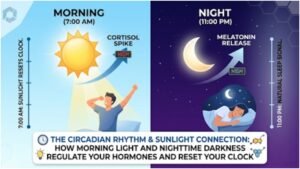
How you wake up is just as important as how you fall asleep. To kill morning fatigue instantly, you need to view natural sunlight within 30 minutes of waking up. Sunlight triggers a timed release of cortisol, which acts as a natural alarm clock for your cells. More importantly, seeing bright light in the morning sets a “countdown timer” for your brain to start producing melatonin about 16 hours later.
Instead of reaching for your phone or a cup of coffee immediately, try standing by a window or stepping outside for five minutes. This simple “biohack” resets your circadian rhythm and ensures you won’t be wide awake when you actually want to go to bed later that evening. This habit significantly improves your focus endurance and cognitive performance throughout the day, whether you are managing a complex team or studying for a difficult exam.
Why Quality Sleep is the Secret to Professional Success
In many modern cultures, staying up all night to finish a project is viewed as a badge of honor or a sign of hard work. In reality, a brain that hasn’t slept is functionally similar to a brain that is legally intoxicated. During sleep, a specialized system in the brain called the “glymphatic system” opens up, acting like a dishwasher to wash away metabolic waste and toxins that build up during the day.
Without this nightly “brain wash,” your ability to solve complex problems, regulate your emotions, or engage in dissertation research stamina drops significantly. For those pursuing high-level academic success, sleep is the ultimate competitive advantage. It improves your ability to synthesize new information and think creatively. When you prioritize rest, you aren’t being “lazy”—you are performing high-level maintenance on the most expensive and important piece of equipment you own: your brain.
The 3-2-1-0 Formula for Consistent Rest The Science of Sleep
To guarantee you wake up feeling rested every single morning, follow this simple countdown to protect your sleep cycle stages:
- 3 Hours Before Bed: Stop eating large or heavy meals. Digestion requires energy and raises your core body temperature, which can prevent you from falling into deep sleep.
- 2 Hours Before Bed: Stop working. Close the laptop, stop checking emails, and put away the “to-do” list. Give your brain permission to shut down.
- 1 Hour Before Bed: No screens. The blue light from your TV or phone is the enemy of rest. Instead, read a physical book, listen to a podcast, or take a warm bath.
- 0: The number of times you should hit the “Snooze” button. Research shows that “snooze sleep” is low-quality and actually makes you feel more tired by confusing your brain’s hormonal response.
The Role of Nutrition and Hydration The Science of Sleep
What you put into your body during the day determines how your body behaves at night. While most people know that caffeine blocks adenosine (the chemical that makes us feel sleepy), many don’t realize that caffeine has a half-life of about 6 hours. This means if you have a large latte at 4:00 PM, half of that caffeine is still in your system at 10:00 PM, preventing your brain from entering deep sleep.
Similarly, while alcohol might help you fall asleep faster, it acts as a “sedative” rather than a sleep aid. Alcohol prevents you from entering REM sleep, which is why you often wake up feeling “foggy” or irritable after a night of drinking, even if you “slept” for eight hours.
| Substance | Effect on Sleep Stage | Recommended Cut-off |
| Caffeine | Blocks Deep Sleep Entry | 10 Hours before bed |
| Alcohol | Suppresses REM Sleep | 4 Hours before bed |
| Sugar | Causes nighttime wakefulness | 3 Hours before bed |
| Water | Can cause “sleep fragmentation” | 2 Hours before bed |
Final Thoughts: Building a Sustainable Routine
Mastering the science of sleep doesn’t happen overnight. It is about building nano-habits that eventually become second nature. Start by changing just one thing—perhaps your wake-up time or your evening screen usage—and observe how your body responds over the course of a week.
Sleep is the literal foundation of your physical health, your mental well-being, and your career potential. When you treat your bedroom like a sanctuary and your sleep like a non-negotiable appointment, you stop surviving the day and start thriving. By aligning your lifestyle with your biology, you can finally end the cycle of exhaustion and start every single morning with genuine vitality and a sharp, focused mind.
Frequently Asked Questions
- How long does it take to reset a sleep cycle?
Most people can recalibrate their internal clock in about three to four days of consistent habits. The key is maintaining a strict wake-up time, even on weekends, and getting natural sunlight as soon as you get out of bed to signal the start of the day to your brain.
- Does a midday nap ruin night-time rest?
Not necessarily, but timing is critical. A “power nap” of 20 minutes can boost alertness without causing grogginess. However, napping for over an hour or sleeping late in the afternoon can reduce “sleep pressure,” making it much harder to fall asleep at your intended bedtime.
- Why do I feel tired even after eight hours of sleep?
Quantity does not always equal quality. If your sleep environment is too warm, or if you consumed caffeine or alcohol late in the day, your brain may stay in “light sleep” phases. This prevents you from reaching the deep, restorative stages necessary to feel physically and mentally refreshed.
- Can I catch up on missed sleep during the weekend?
While extra rest can help reduce immediate fatigue, you cannot truly “pay back” a chronic sleep debt. Sleeping in late on Saturdays and Sundays often leads to “social jetlag,” which disrupts your rhythm for the coming week and makes Monday morning significantly harder.
About The Author
Henry Lee is a dedicated content strategist and academic consultant at MyAssignmentHelp. With a focus on digital wellness and cognitive performance, he specializes in helping students and professionals optimize their daily routines for long-term success.